The Hidden Gaps in Most Hiring Processes at Scaling Companies

Most scaling companies believe their hiring process is working.
Roles eventually get filled. Teams push through. Growth continues, at least on paper. On the surface, nothing looks broken enough to demand immediate attention.
But underneath that surface, gaps quietly form. And those hiring gaps cost more than most leaders realize.
The problem is not that hiring is completely dysfunctional. It is those small inefficiencies that compound over time. A vague role definition here. An unstructured interview there. A delayed offer. A lack of follow-up data. Individually, these issues feel manageable. Together, they slow growth, increase hiring costs, and push strong candidates elsewhere.
These problems in the recruitment process are rarely obvious from the inside. That is why so many companies underestimate how much their hiring process is actually holding them back.
Scaling Exposes What Early-Stage Hiring Can Hide
In early stages, hiring is often scrappy by necessity. Leaders rely on referrals, instinct, and urgency. Decisions are fast because teams are small and communication is informal. As companies scale, those same habits start to break down.
More stakeholders get involved. Roles become more specialized, and hiring volume increases. What once worked informally now needs structure. Without it, friction shows up in ways that feel familiar but harder to diagnose.
- Roles take longer to fill.
- Candidates drop out mid-process.
- Offers are declined more often.
- Teams feel stretched even after new hires start.
Gap One: Weak Role Definition at the Start
One of the most common hidden hiring gaps is role definition.
Many job descriptions list responsibilities but fail to define outcomes. Others rely on vague requirements like “X years of experience” without clarity on what that experience actually needs to produce.
When roles are not clearly defined, sourcing becomes unfocused, candidates are evaluated inconsistently, interview feedback conflicts, and decision-making slows.
Without alignment on what success looks like, teams end up debating candidates instead of assessing them. That alone can add weeks to a search.
Gap Two: Interviewing Without a Shared Framework
Interviews often feel thorough while still being ineffective.
Different interviewers ask different questions. Evaluation criteria are unclear. Decisions are driven by gut feel rather than structured assessment.
This creates confusion internally and frustration for candidates.
Structured interviews are not about rigidity. They are about creating clarity so decisions can happen faster and with confidence.
Gap Three: Slow or Inconsistent Candidate Communication
Candidates notice silence immediately.
Delayed updates, vague timelines, or unclear next steps send a message that hiring is not a priority. Even when candidates remain interested, confidence erodes with every gap in communication.
For scaling companies competing against larger brands, this is especially damaging. Consistent communication within 24 to 48 hours is not a courtesy but a competitive necessity.
Gap Four: No Real Data Driving Hiring Decisions
Many companies track little more than whether a role is filled. They do not consistently measure:
- Time-to-hire
- Conversion rates from submission to interview
- Time between final interview and offer
- Retention at six or 12 months
Without this data, hiring problems feel subjective. Teams rely on anecdotes instead of patterns. That makes it nearly impossible to resolve the problem in the recruitment process or identify where delays are coming from.
Gap Five: Overreliance on Applicants Instead of Proactive Sourcing
Another hidden gap in many hiring processes is an overreliance on inbound applicants. Applicant flow alone is rarely enough for high-impact or hard-to-fill roles, as the strongest candidates are often passive and require targeted outreach and consistent messaging.
When companies depend only on applicants, candidate quality becomes inconsistent, searches take longer, and teams are more likely to settle rather than make a confident selection, often realizing too late that the sourcing strategy was the problem all along.
Gap Six: Offers and Closing Left Until the Last Minute
Even strong hiring processes can fall apart at the offer stage.
Compensation ranges are unclear. Approvals take too long. Offers are delayed while internal conversations happen that should have happened earlier.
Candidates interpret this as hesitation. Offers presented quickly and clearly signal confidence. Delayed offers signal risk.
Gap Seven: Onboarding and Retention Treated as Separate Problems
Hiring does not end when an offer is accepted. Without structured onboarding, early momentum is lost. New hires struggle to ramp up. Managers assume alignment that does not exist. Six months later, retention becomes a concern.
This is one of the most expensive gaps because it affects not just hiring speed, but long-term performance.
See the Hiring Gaps Before They Cost You More
Most problems in the recruitment process persist because they are hard to see from the inside. Scaling companies tend to focus on filling individual roles rather than stepping back to evaluate the hiring process as a system. As long as roles eventually get filled, hiring feels “good enough,” even when timelines stretch, candidates drop out, and internal teams absorb the cost. Over time, those familiar issues quietly increase the cost of slow hiring and make it harder to compete for strong talent.
If roles are staying open longer than they should or candidates are disengaging late in the process, the issue is rarely the market. It is the process. Before opening another role, take an honest look at where your hiring system is breaking down.
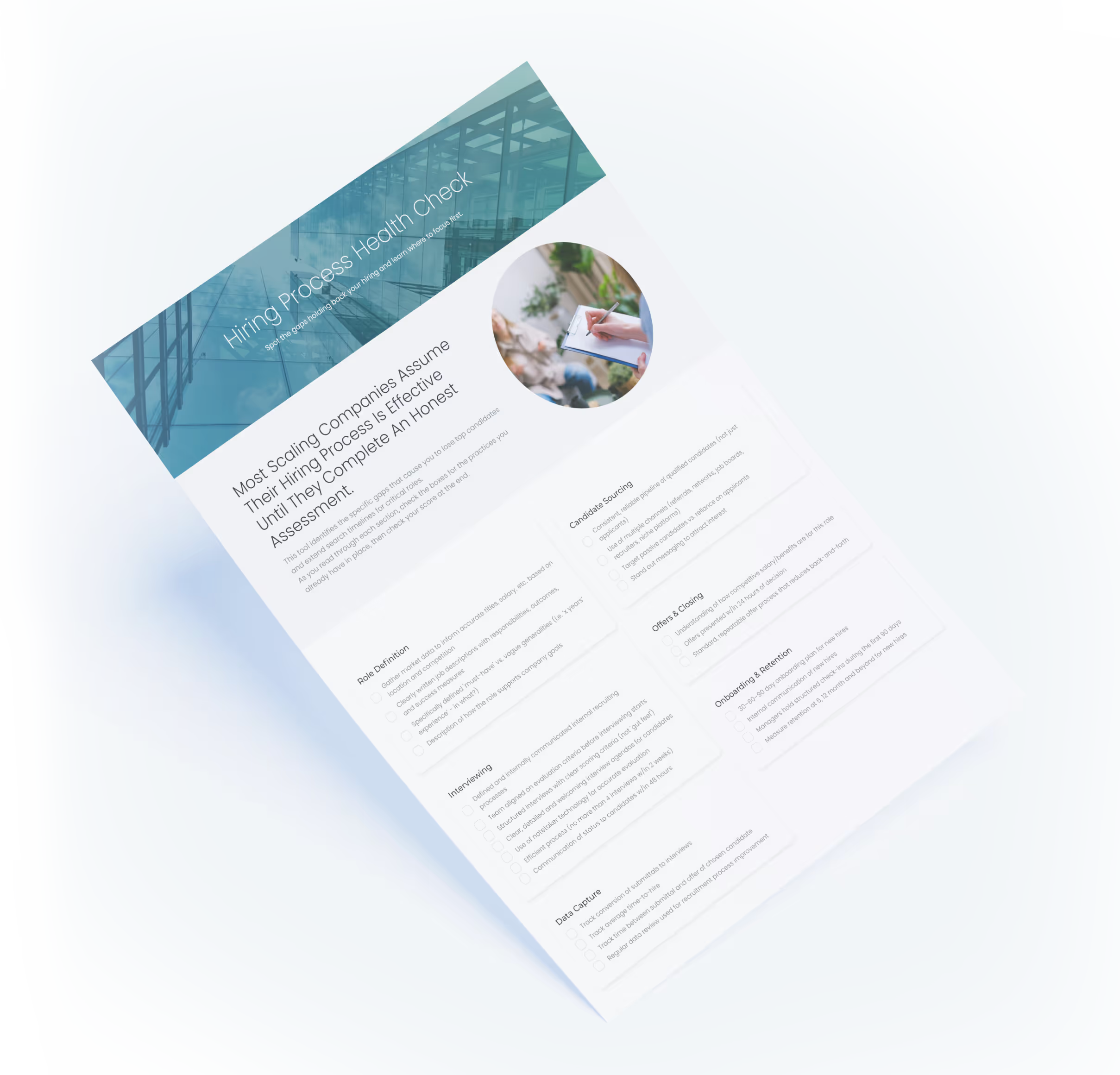
Inside Talent’s Hiring Process Health Checklist gives scaling companies a clear, practical way to identify what is working, where gaps exist, and what to fix first so hiring can move faster without sacrificing quality. Download your free copy now!
Get Your FREE Hiring Process Health Checklist